
Intel Makes a Comeback, Securing Manufacturing Orders from Two Industry Giants!
According to The Wall Street Journal, Intel and Apple have reached a preliminary agreement for Intel to manufacture some of Apple’s chips. This marks a major turnaround for Intel’s foundry business.
Apple ships over 200 million iPhones annually and also boasts a vast product lineup that includes iPads and Macs.
According to industry sources, the partnership is likely to focus initially on certain entry-level chips, such as lower-end M-series chips and processors used in some iPad models, with the possibility of expanding to A-series chips used in non-Pro iPhone models in the future.
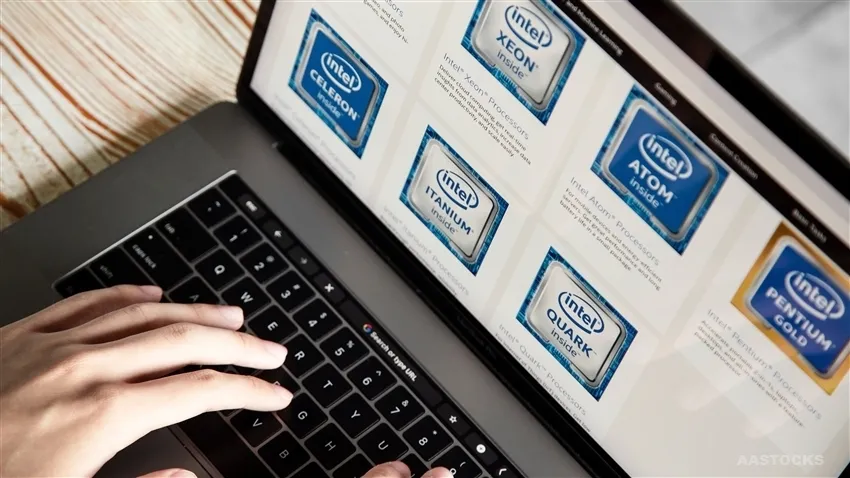
Image source: aastocks
Industry insiders also believe that Apple is unlikely to fully adopt Intel’s current 18A process in the short term.
Some analysts point out that the yield rate for the 18A process has not yet met standards, and Apple is more likely to wait until the next-generation 18A-P process matures before officially scaling up adoption.
Compared to the standard 18A process, the 18A-P is expected to further improve yield rates, stability, and power efficiency, with mass production on a larger scale anticipated as early as next year.
In addition to Apple, Intel has recently entered into a deep partnership with Musk.
Previously, Musk announced plans to build a new chip manufacturing plant in Texas, with Intel serving as one of his key foundry partners.
Just today, Musk visited Intel’s advanced wafer fab in Oregon. The facility, part of Intel Foundry (Intel’s foundry business), utilizes Intel’s latest 18A process and will be responsible for mass-producing next-generation high-end processors such as Panther Lake.
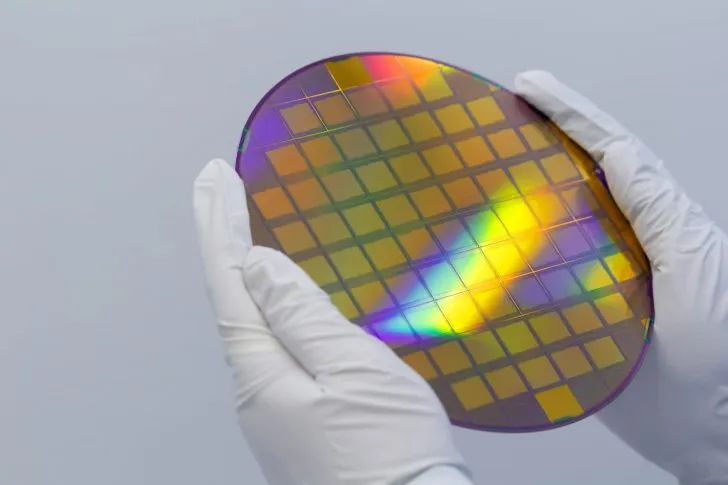
Image source: wcftech
Based on current trends, Intel’s foundry business is gradually rebounding, largely due to the U.S. government’s strong push to develop a domestic semiconductor supply chain.
In 2025, the U.S. government converted nearly $9 billion in federal subsidies into Intel shares, acquiring approximately a 10% stake and becoming a major shareholder. In September of the same year, NVIDIA also invested $5 billion in Intel and announced a partnership. Under the agreement, Intel will custom-design certain data center CPUs for NVIDIA.
The U.S. is attempting to foster a domestic advanced manufacturing giant capable of competing with TSMC, and Intel is their choice.
Second, the AI boom has led to extreme shortages in advanced process capacity.
Currently, a significant portion of 3nm and 2nm production capacity has been snapped up by AI chips. Apple’s A-series and M-series chips are also highly dependent on advanced processes, and there have been reports of supply shortages for the iPhone 17 series.
For Apple, continuing to rely entirely on TSMC carries increasingly high risks; seeking out different suppliers to spread the risk is the wiser choice.
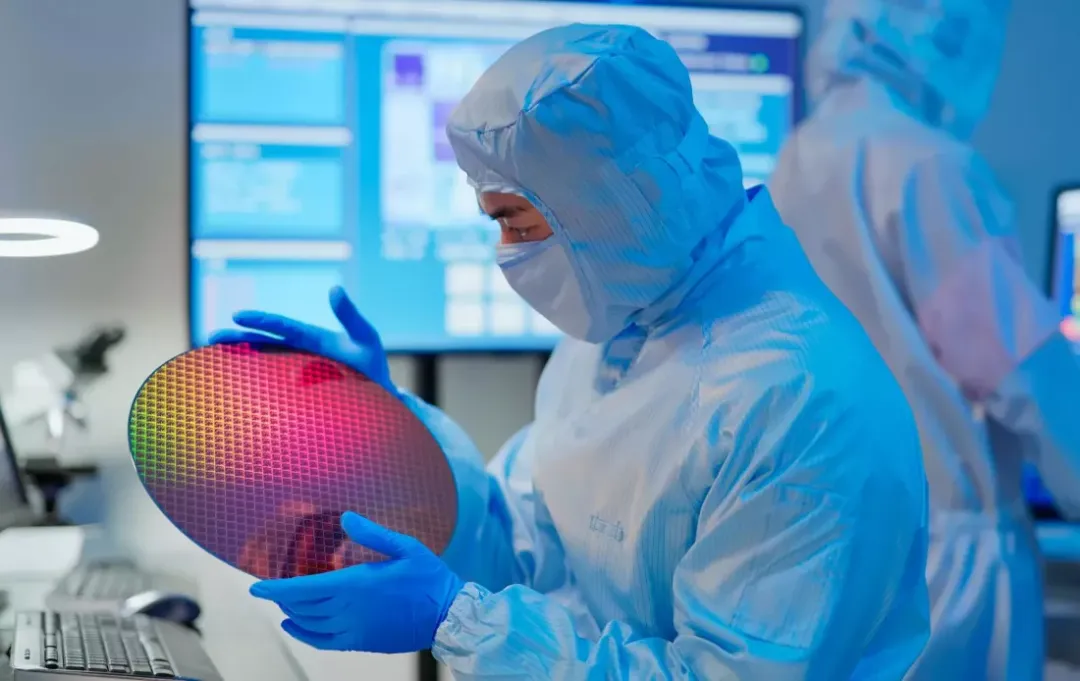
Image source: China Business Times
Over the past decade, Intel was completely overtaken by TSMC and Samsung due to slow progress in process technology and internal management chaos. In particular, after delays in the 10nm and 7nm nodes, the market lost confidence in Intel, and its stock price continued to fall.
It wasn’t until Chen Li-wu took office in 2025 that Intel began a large-scale restructuring, including reorganizing its management team, strengthening its foundry division, and accelerating the development of the 18A (approximately 1.8nm) and next-generation 14A (approximately 1.4nm) processes.
Currently, Intel is actively expanding capacity at its Chandler, Arizona, fab and has begun mass production of its most advanced 18A process, hoping to compete with TSMC’s 2nm technology.
Source: The Wall Street Journal, China Business Times